

How we make this. Every day, we count things.
Grades. Likes. Salaries. Followers.
And somewhere along the way, we forget what they were for.
Here, we take one big question at a time and follow it all the way down.
We will get some things wrong. That is how learning works.
just a human.
Five things we do, in this order, every time. None of them is clever. All of them are on purpose.
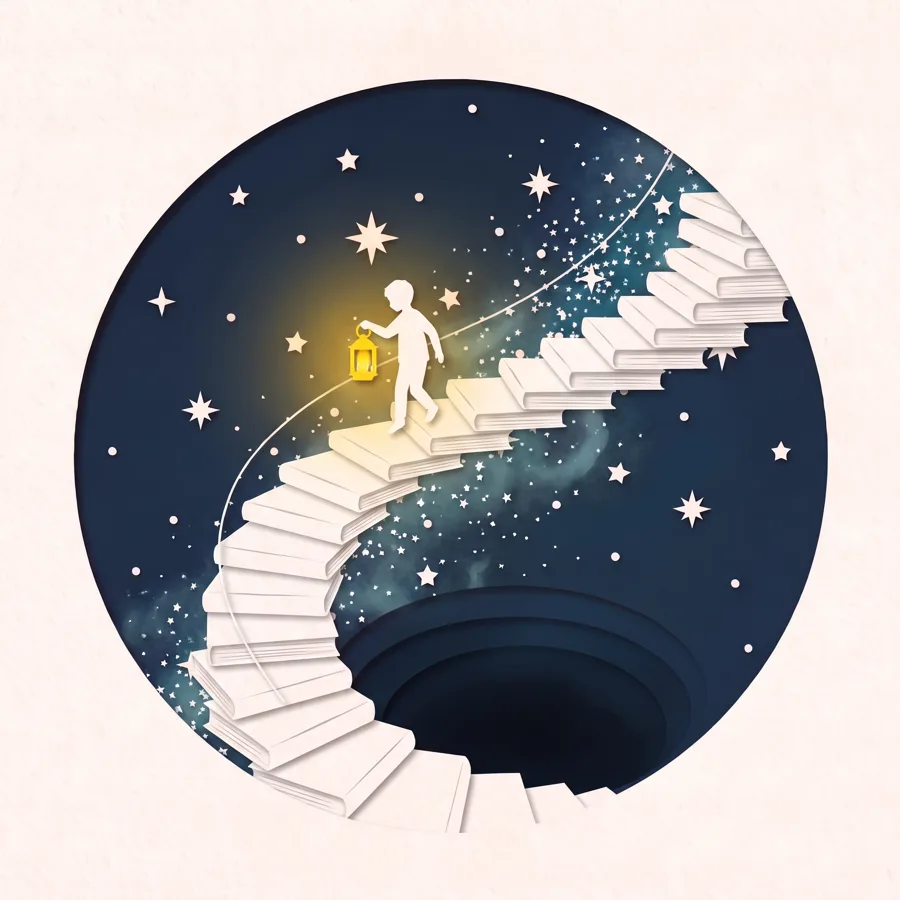
Step 1 of 5A question we can’t put down
It usually starts small. A student hands in homework that a machine could have written. A forest is counted in timber. A familiar thing gets a new name, and everyone nods. Something about it itches, and we can’t leave it alone.
We don’t pick a topic because it is big, loud or trending. We pick the question we keep coming back to: what is this really for? We write it down as a question, not a claim, because we don’t know the answer yet. That is the point.
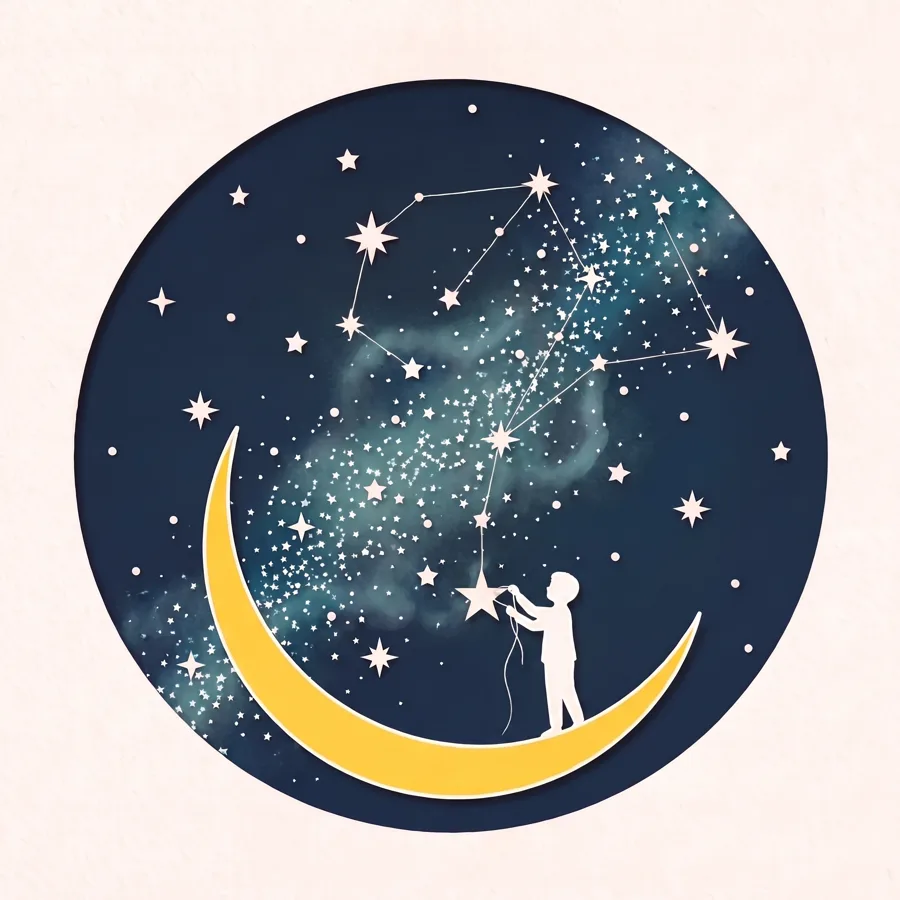
Step 2 of 5We follow it all the way down
We ask why, and then why again. Before we give any opinion, we map the whole room: who is involved, what the technology can and can’t do, where the money goes, how it looks from the other side. We define the words before we argue about them. We test the idea on something real and close to home. Then we look to history for the rhyme, and mark where the parallel breaks.
Papers, data, the people involved. And where our knowledge runs out, we say so, on a line of its own.
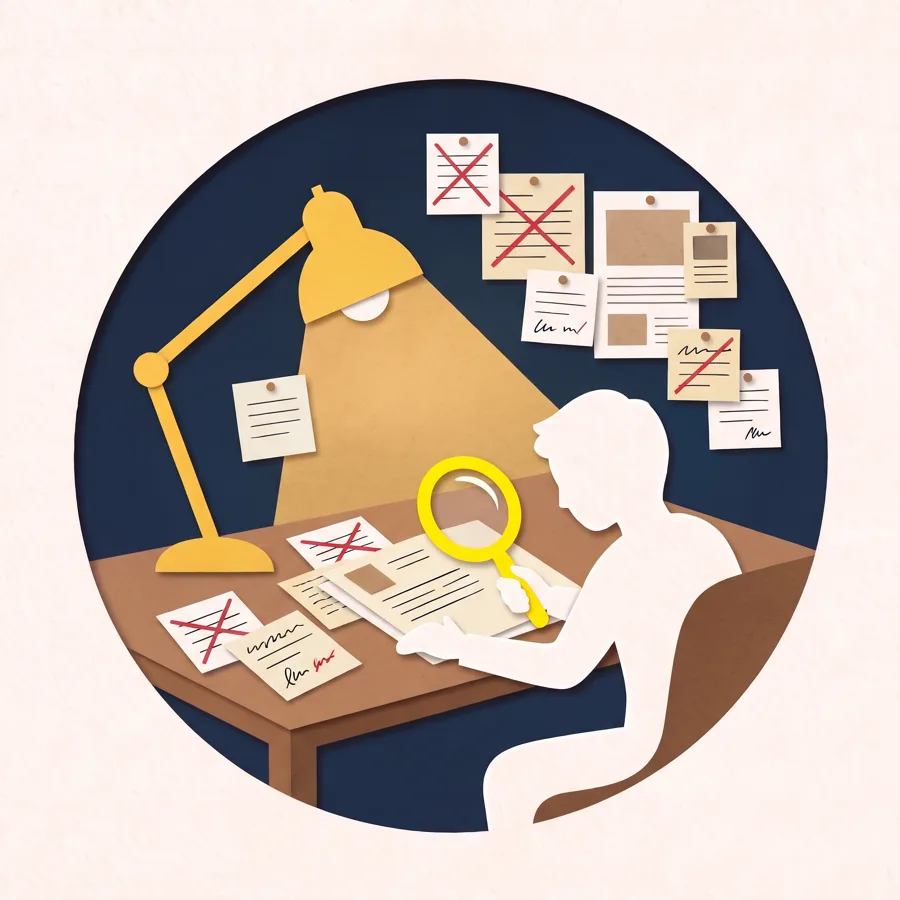
Step 3 of 5We check every claim
Every fact carries a numbered source that a stranger could find. Every opinion is marked as an opinion, with “My view” or “My reading”. A guess says it is a guess. Where nobody knows, we say so on a line of its own. When we use an analogy, we show where it breaks. News carries its date, such as “as of 8 Oct 2026”, because it ages fast.
A second reader checks our claims too, and a human goes back to the original source wherever anyone is unsure. And we try to remember that explaining why someone did something is not the same as saying it was right.
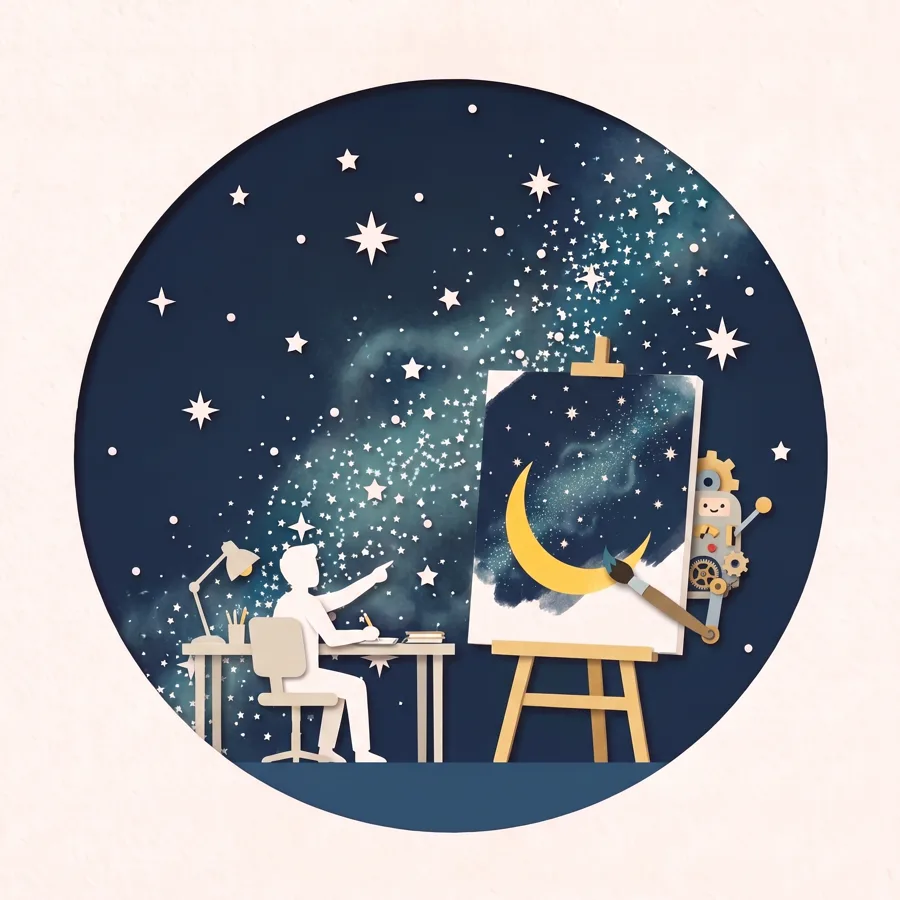
Step 4 of 5A human decides, machines help us draw and voice
A person chooses the question, makes the call and writes the words. AI tools help us search, check and draw, and they voice our films. Every illustration is a quiet, slightly absurd cut-paper scene, and none of it pretends to be a photograph or a record of what happened.

Step 5 of 5We say so when we are wrong
We will get some things wrong. When we do, we correct them in public. Not quietly, in the background, but on the corrections page, dated, with what we got wrong and what changed, and with a note on the story itself.
Being wrong is not the failure here. Hiding it would be. If you spot a mistake, write to hello@thejustahuman.com. You will be helping us do the one thing we are here to do, which is learn.
One more thing we owe you. The long conversations behind our first two stories were partly lost and rebuilt, and story 003 involves a company whose tools we used. Each story says so plainly in its note at the end.