About
We are only a human.
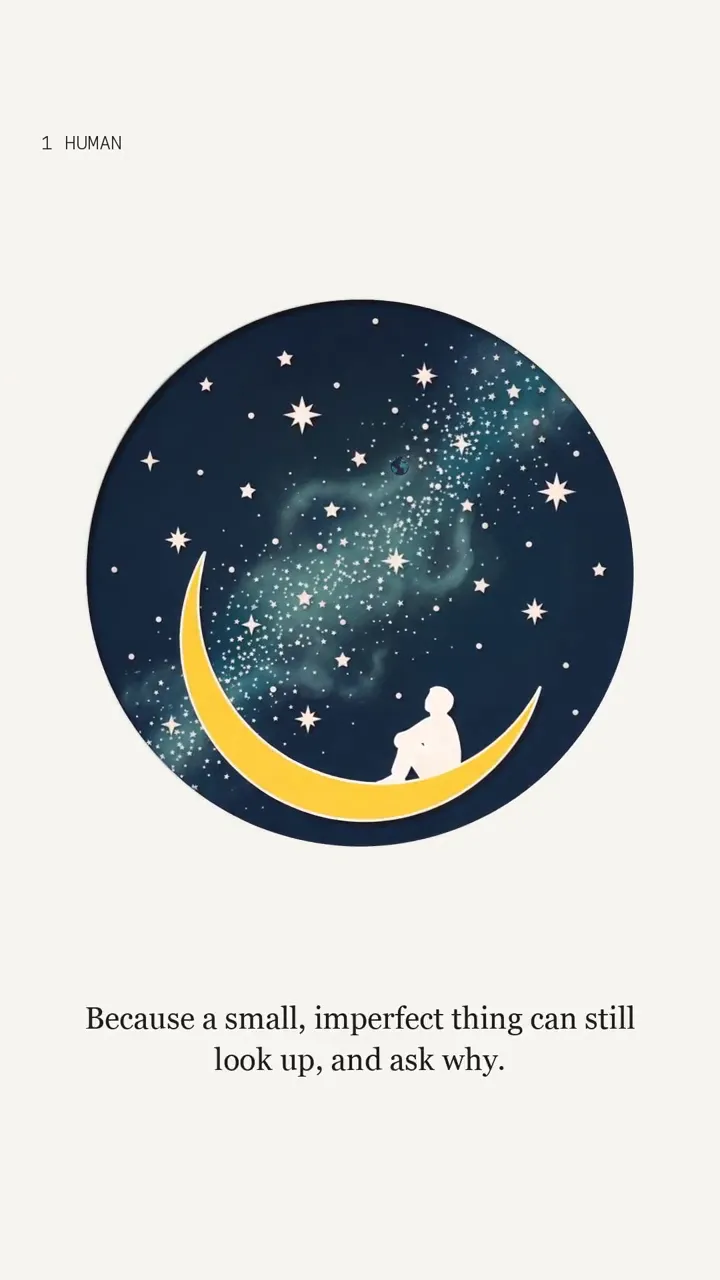
A small human sits on a yellow moon and looks at the sky. That is our logo, and it is most of what we have to say.
We are only a human
We are only a human, a species, not that important. We just think we are the centre of the universe in the moment of living. From inside a life it feels true. From far enough away, we are barely a speck. We like holding both.
We are perfectly imperfect. The flaw is part of the beauty, not something to fix before we begin. We are nothing, but not in the wrong way.
What the name means
The name is older than the site. In 2020 it was a one-line bio: “We are just a human.” Six years later it asks a question of the world instead of a person: what is this really for?
It means a few things at once. The one speaking is a human, not an institution and not a machine. The subject is the human under every system. We are only human, with mixed motives and blind spots. And “just” is a method: a learner going deep in public, allowed to be wrong.
What we look at
The gap between what we measure, name or build, and what we actually want. A grade and the learning it was meant to show. A timber count and the forest. A new name and the thing underneath it.
We keep returning to three rooms: the tools we make, who holds power and where the money goes, and what history already knows.
Four kinds of knowing
There is something we know we know. There is something we know we don’t know. There is something we don’t know we know. And there is something we don’t know we don’t know.
The idea is old, from Luft and Ingham’s window in 1955 to Polanyi’s remark that we can know more than we can tell. The facts, with sources, are the first kind. Our open questions, said out loud, are the second. The third is what we hope to give you: what you already sensed from your own life but never put together. It feels less like learning and more like recognition. The fourth is why we stay humble.
It is fine to be wrong
We do the research seriously and hold every conclusion lightly. Pages that go deep tend to sound certain, and humble pages tend to stay shallow. We want both. We show our sources, mark our opinions and say “we don’t know” plainly. When we get something wrong, we correct it in public, and we count that as learning, not loss.
One big question at a time, followed all the way down.
If one of our stories gave you a word for something you already knew, keep it, or send it to someone who would feel the same.